David Coats

Proverbs 31–Not a reference to the perfect wife?

By Dr. Judith R. Coats

Let’s begin with a brief reminder that the Bible is a book of literature: history, poetry, letters, prophecies, narratives (stories), and genealogies.  Proverbs is a poetic book, so the contents will be presented with metaphors, similes, analogies, contrasts, symbols, and many other word pictures.  And by the way, Proverbs is full of mini-sermons, not promises. From a bird’s eye view, the book of Proverbs could be likened to a court case: Lady Wisdom v. Lady Folly. In the first 9 chapters, Lady Wisdom presents her case while Lady Folly presents her case; and the two go back and forth.  “Wisdom shouts in the streets. She cries out in the public square. She calls to the crowds along the main street, to those gathered in front of the city gate: ‘How long, you simpletons, will you insist on being simpleminded? How long will you mockers relish your mocking? How long will you fools hate knowledge? Come and listen to my counsel. I’ll share my heart with you and make you wise'” (Proverbs 1:20-23 NLT).  Whereas Lady Folly presents her case:  “The woman named Folly is brash. She is ignorant and doesn’t know it. She sits in her doorway on the heights overlooking the city. She calls out to men going by who are minding their own business. ‘Come in with me,’ she urges the simple. To those who lack good judgment, she says, ‘Stolen water is refreshing; food eaten in secret tastes the best!’ But little do they know that the dead are there. Her guests are in the depths of the grave” (Proverbs 9:13-18 NLT).

Lady Folly does not present a pretty picture at all.  In fact, Lady Folly has “been the ruin of many” (Proverbs 7:26 NLT).  I would urge you in a re-reading of Proverbs that you reframe chapters 1-9 as choices between Lady Wisdom and Lady Folly.  Why is that significant? Because all of us have choices of wisdom or folly.  The strange woman of which Proverbs speaks (or immoral woman or promiscuous woman) is the metaphorical Lady Folly.  Women and some men tend to think that chapters 5 and 7 in particular do not apply to them because they avoid being ensnared by a prostitute; however, we are all open to choices of folly (foolishness), which is in truth what the author is suggesting. The scriptures will use objects and ideas and persons that people can understand to get the main point.  When Jesus says, “I am the door,” he is not speaking of a literal door.  He uses the metaphor so that people can understand that he opens the way to eternal life.  When the poet uses Lady Wisdom, she embodies all the choices of wisdom that are presented throughout the book of Proverbs.  When the poet uses Lady Folly, she embodies all the choices of folly that lead to sadness, loss, unhappiness, and death (of joy, relationships, or literal death). In fact, Lady Wisdom makes things clear: “Therefore, they [those who choose folly] must eat the bitter fruit of living their own way, choking on their own schemes. For simpletons turn away from me—to death. Fools are destroyed by their own complacency” (Proverbs 1:31 and 32 NLT).

Chapter 10 begins a series of testimony as to what wisdom would look like in life on a practical basis and what folly would look like.  Antithetical parallelism is a device of the poet in chapter 10 and following. Here is an example: “The wise are glad to be instructed, but babbling fools fall flat on their faces” (Proverbs 10:8 NLT). For several chapters, the conjunction but is used frequently to contrast wisdom and folly.  The poet also uses the term better to demonstrate the wiser choice: “Better to be poor and honest than to be dishonest and a fool” (Proverbs 19:1 NLT). Additionally, the poet uses mini-sermons for the listener like the following: “Don’t say, ‘I will get even for this wrong.’ Wait for the Lord to handle the matter” (Proverbs 20:22 NLT).  Intermingled among the contrasts is the use of similes (a comparison using like or as) as well: “An honest answer is like a kiss of friendship” (Proverbs 24:26 NLT). After chapters 10-29 basically present in a variety of ways practical wisdom for this life, the closing arguments begin.

Agur, in chapter 30 muses that he has not fully mastered earthly wisdom.  He encourages us to look to the eagle, the ship on the sea, the ants, the locusts, and the lizards in king’s palaces.  Once again, more lovely poetry on display.  Finally, we arrive at chapter 31.  In keeping with the poetry of Proverbs, it makes no sense whatsoever to find at this point the manual for the perfect wife.  The poet uses the image of the wife to mirror Lady Wisdom’s closing argument, so to speak.  The book ends are an opening where Lady Wisdom explains why Proverbs was written; she closes with a beautiful picture of a life of wisdom in relationships, in commerce, in words, in marriage, in the home, with employees, in choices to strengthen our bodies, and to value the lasting gem of wisdom.  The summation is complete in its compiling of chapters 10-29 into a series of wisdom choices. Proverbs 31 is for all of us.  A friend of mine called me on Mother’s Day, and she said this to me: “Well, we just got beat up by our pastor. He preached at us from Proverbs 31. I feel like a complete failure.”  Let me give everyone hope:  I firmly believe that we need to take a fresh look at Proverbs 31–the metaphorical personification of Lady Wisdom, a lesson for men and women, not the lecture on a perfect wife.  And remember, the poet simply uses the husband and wife relationship as an intimate metaphor for the guarded walk that we must have through this life as we make choices, hopefully, of wisdom and not of folly.

Posted by David Coats, 2 comments

Giving Honor to a Faithful Man upon His 60th Birthday: June 7, 2017

Lovingly, From Judi

Where do I begin? Sitting here at my desk on an absolutely lovely day, I’m staring at a blank screen wondering how to sum up 38 years of marriage to one of the most remarkable people that I have ever known—David A. Coats. He is not perfect, but he is a faith-filled man. We far too often, in acknowledgement of humility, neglect to speak out, giving honor to whom honor is due. This article is one of my birthday gifts to this wonderful man. Let me summarize my thoughts in a few sentences:
1. His passion for God far surpasses anything that I have every witnessed before. He is what I call, “The real deal.” No fakery; No show for others; No falsehood.
2. I cannot remember a day when he did not spend time with God in the Word or in song or in prayer.
3. I have never seen him angry in 38 years—distressed or peeved at times, but never angry.
4. When God says to “love your wife as Christ loved the church,” I have known such love emotionally and physically by God’s grace—Dave has unselfishly loved me, served me, and worked alongside me as a team.
5. I cannot get a “TO DO” list written because he goes above and beyond to anticipate needs and jobs before I can write them down.
6. When his pride raises its ugly head, he is willing to ask forgiveness and to try to change. And when my pride and selfishness does the same, he forgives.
7. Many men are captivated by the fear of man, wanting approval of those around them. Dave has not desired the praise of men for most of the days that I have known him. Others, even Christians, have “shoved” him aside for their own advancement or their own agenda. His response has always been, “Judi, God knows.”
8. He truly partnered with me in the rearing of our children. He stood his ground in wanting them to be salt and light when the tide of “isolating” the children from the world was extremely popular in Christian culture.
9. He loves his children and grandchildren so deeply and so sincerely that he daily pours out his soul before God on their behalf.
10. He has led us to life and ministry in three different countries: Haiti, Canada, and finally in the United States.
11. He dearly loved the folks of Dunbar Community Bible Church; and he found great joy in preaching the Word, counseling, and discipling the church body together. He desired nothing more than folks to walk closely with God. He now continues to serve God in Colorado.
12. Along with the love and help of several others, his vision for a local, non-profit youth center took shape six years ago. He wanted to see the children in our community flourish in life. After our move to Colorado, this center continued on.
13. He also loves the residents of our community. He prays for many of them faithfully—I see their names on a sheet of paper in his Bible.
14. As a certified, biblical counselor, he gently leads others by staying by their side through the counseling process for sometimes weeks, sometimes years. He is not the type of counselor that sits behind a desk, says “Go change,” and then schedules the next person for the day.
15. He loves to laugh with me and to go on “day-cations” to parks, hardware stores, Panera in Green Bay for hazelnut coffee, or good-old Iron Mountain, Michigan, for a burger. (Or to the many cool places in Denver)
16. He loves to vacation, especially going to see our children and their families in Denver and in Virginia Beach.
17. He actually has a soft spot in his heart for animals. He is very gentle with the dogs and outside “farm cats” that we have had as pets.
18. He has loved me for better and for worse. And I have probably delivered on the worse more often. But he has always been patient with me.
19. He has also stood his ground in being careful with finances; he has disciplined our family to stay clear of as much debt as possible. He calls it a “save to spend” philosophy. That way, we can use money to enjoy others and our family times. And we can also help others in need.
Why did I write this tribute? I guess that I simply wanted the world to know that a really terrific person is turning 60 this week, June 7th, 2017. I think he is very special.

Posted by David Coats, 1 comment

Conquering Porn Through Gimmicks?

NEWS ALERT: I must respond to a recent article/advertisement. The article/advertisement, of all things, was written for the Bible Study Magazine. Why that placement strikes me is that the ad for a DVD series tells readers that “churches often treat this issue [of porn] as a moral one, but fail to recognize it’s mainly a brain problem.” The ad goes on to say that “science sheds new light on biblical truth regarding strongholds of the mind.” Many people will read this advertisement and believe it represents the latest in scientific studies that will explain why their attempts to put away their sin have failed. More importantly, the promo immediately shifts the problem from a moral one to a physiological (brain) failure and struggle. So they are saying that the heart is not the source of our choices anymore; they say that the source is the brain. The Bible does not say that.

I am finding that the struggle with pornography in its many forms is like weight loss. People are always looking for the next great book or pill or DVD that will help them. And it sells. People are conscious that the battle is problematic, so they have their ups and downs. In their worst moments, they are like people overweight who reach for whatever seems to offer them new hope. But they are straying from the truth that is in actuality their hope, not some new fad.

Does the DVD series/advertised program that I’m referring to incorporate Bible? The ad says that they incorporate Bible: “This cinematic series will give them [those trying to help addicts] confidence that they can restore men using proven Bible-based principles.” Wait.  This promotion of a Bible-based material is a just a gimmick. If you are truly dependent on the Word of God and the Spirit of God through the grace of God to change porn addicts, then you are on solid ground. But this promotional ad draws people in with the idea that they must change their brains. Once again, the article uses the terminology of the neurotransmitters being the bad guys. Neurotransmitters supposedly do things to our brain that will keep us in bondage according to the ad. False. Out of the heart come our choices (Matthew 15) according to the Word of God. The so-called imbalance of the neurotransmitter is a clinically unproven theory. Feel free to look at the scientific basis for these statements and watch for wording that says “we think” or “we believe that” this MAY be connected to the addiction struggle. Therein lies the problem of accepting these conclusions as fact.

One other comment. The advertisement is entirely focused on the struggle men have in this area. They are totally ignoring that fact that the 21st century church is being inundated by women addicted to pornography. I believe most studies show 30% or more of Christian women are battling this moral issue.

Do I want men and women to get help and to find answers to overcome porn by the steadfast counsel and discipleship within the church? Absolutely. And the help they find in the church body is what Paul told the Corinthian believers was sufficient to disciple them into new people who put away their old habits. And if you really want to change, winning the battle of soul purity, try reading and meditating on the goodness and greatness of God daily. Let that theology nourish and “heal” your soul.  You can find Soul Purity material that will accomplish that process of renewing and healing here.

Posted by David Coats, 0 comments

My Teen is a Follower: Help!

As I sat alongside a mom, I was concerned for many things. I knew she needed my comfort, my compassion, and my care. And out of my own compassionate response to her story,  I also knew I would have to help her to understand her daughter’s choices based on what God says about the inner man.

This mom went on to say, “Gail is a follower. She always has been. She just needed the right friends. She needed the right school and environment to help her do what was right. If she were a leader, I know she would have said, “No” to that jerk. He used her to get his immoral desired fulfilled. If she had had godly friends or Christian teachers, she would have been fine. We couldn’t afford Christian school or home schooling. She would not have done this if we could have placed her in the right school setting. She also needed a Christian dad. That would have made the difference. She would have known not to follow a “foolish young man.”

You have heard these kinds of words from some of your friends whether their loved one has made an immoral choice or a foolish choice. Let’s ask some surface questions about what happened: What was the situation? What did the daughter do? What details surrounded the story? Now for the key questions that go deeper: What was the daughter thinking at that moment? What did she want? What was the result of her desires? These are more helpful questions. Why? The answers to these questions show what is going on in a child’s heart. The key questions show what the daughter wanted and what she hoped to avoid. You will get a picture of more than just the circumstances and surrounding influences by asking the right questions. Why is this process so important? It is because Jesus says the target is important:  the heart. He says that what is in the heart is the basis for our wise or foolish choices. If a person changes at the heart level, we will see the actions, reactions, choices, and results change as well. And more importantly, we will move our children and teens in the direction of choices that please God. (He is wisdom and the antithesis of God is folly).

How do we see this heart-centered view of life with Jesus?  In Matthew 15, Jesus responds to the attitude of the Pharisees. They are so concerned about the environment, the situation, the outside influences. “Clean that up so you can feel good about living for God,” according to them. Jesus looks at their way of living life and cuts right to the core of it all. He says, “What comes out of the mouth proceeds from the heart, and this defiles a person.  For out of the heart come evil thoughts, murder, adultery, sexual immorality, theft, false witness, slander. These are what defile a person. But to eat with unwashed hands does not defile anyone.” Wow. These words were a major shock to their ears. And I think for many of us, although we believe Jesus is Savior and Lord, we don’t think what He says in the Bible is really relevant to our issues and struggles like rearing kids and dating and the bully from across the street. To put it another way, Jesus says that the reason the daughter wanted the immoral advances of the guy at school is that she wanted that relationship more than something else, and “that something else” would have been a choice that pleased God. Why? Jesus knows the heart of people. He does not see the heart as a neutral territory. The heart is the place in which a war of the worlds of spiritual proportions is going on. At the heart level is where the war must be won. Don’t fight the battle against exterior influences while ignoring the most influential battle ground which is the heart. So although we lament the evil of our society and surrounding environment, they are not the source of our problem.

Notice that I used the word influence here. That word shows us that when it comes to our environment, our past, our family, our housing, or schooling situations, these all influence us but do not make us or cause us to do or to be what we are or what we will become. Who I am comes out of my heart desires and my heart thoughts. “Wait,” you may say.  “If we want to talk about what’s going on inside my child, let’s talk about personality.” You may argue that it is clear that your kid’s personality is more quiet, so he/she allows the more outgoing kids, the ones we call leaders, to run the show. You say, “My teen is influenced by peers because of his/her personality.” Is this true biblically? Or does the Bible ignore this problem? Or does psychology and its understanding of personality prove to be more powerful? The Bible does not discuss personality; it does present us with choices based on the heart.  The disposition of my heart will prove to be the basis for my character.  My choices will come from my heart, influence or not, personality or not. See our longer discussion of personality here.

My response at this point is to switch my discussion to another key passage: Galatians 5:16-24. The context is Paul’s explanation of how we live by freedom in Christ. Do we tend to give our flesh its way (desires and longings and choices) or do we tend to allow the Spirit to rule in our life (desires and longings and choices). Can we excuse a child that makes certain choices based on personality? God does not. And He holds us responsible for our choices regardless of our personality. Yes, I realize that each child needs to be taught and to be trained about foolishness and wisdom as they grow up. But the expectation is the same across the board. So for Gail, the teen girl who chose to do an immoral act, God says (with love and sadness) that she is responsible. She could have said no. She could have hated the sin and desired holiness. But her heart should have desired to please God more than pleasing that young man or gaining more of his approval.

I believe our problem (especially as parents) is that we see personality as definitive, rather than becoming like the person of Christ as being definitive. Jesus is neither shy nor extrovert. He is simply God. Perfect in person and relationships with people. When he needed to be (in front of Pilate and Herod), Jesus was quiet, reserved, and under control. When he needed to be, Jesus called out the Pharisees in public, with necessary language and emphasis, but always under control. Do you see how personality fades and godliness becomes paramount, based on the individual situations? If as a parent you put the emphasis on the personality of your child, you give him/her an excuse that will become the norm. And their choices won’t be their fault – ever – into adulthood.

It is interesting how we can read our Bibles with a view that the environment or influences around us are the most powerful factors. If those factors changed, the story would change, we may think. We could blame God for not flexing with Cain. After all, it was his personality to work with crops. So it was God’s fault that he ended up being a murderer. We could blame the pressures on Noah of building the ark, being inside the ark for a year with a bunch of animals. This is why he got drunk, resulting in sin with his son. We could say that the home life of Jacob’s sons was a bad environment. Look at the mess of having 12 kids by 4 different women. And you see all the competition and jealousy that takes place in this family. What a mess. But does Jacob’s home situation mean that they will all turn out bad? Can we blame their home environment? No. God holds each one responsible for his and her choices (interesting discussion would be Genesis 49 and what Jacob says from God about each boy and his future). The sons reap and sow according to their own heart desires and willful choices. And then Joseph comes along. His environment is the same as the rest. He grows up being a favorite of his dad. That favoritism was not good. Joseph ends up being sold into slavery by his own family. He is with hardened slaves and people who worship the sun, moon, and wild animals as their gods for the next couple of decades in Egypt. He is alone. He has no church. He has no loving, godly mom or dad. He has no accountability group. But somewhere along the way he decided that the God of his family was the most important person to Him. His heart desired to please God above all else. According to the personality and influence theory, Joseph should have ended up in bed with Potiphar’s wife. He had no help. But he did know God and had a heart that thought of pleasing God as his priority (Genesis 39:9). His beliefs and desires were what moved him to say no to Potiphar’s wife’s advances.

Help your children/teens to begin to take responsibility for their actions by taking responsibility for the sinful and self-centered desires, dreams, fears, and longings of the heart. Do you want to help your child? I encourage you to regularly ask these questions:

  1. What was the situation? (Who, what, when. . .explore the surrounding events and people with them)
  2. What were you thinking? (About yourself and others, outcomes, possible choices)
  3. What did you want? (Why. . .help them see that what was going on in their heart and desires is the most important part of that event)
  4. What were you feeling? (What emotions were a part of or accompanying their desires and fears)
  5. What was the result? (Choices have consequences. They need to put the two together with their heart desires at center stage)

After a thorough discussion, guide your children/teens to the choices of the heart rather than the negative influences as an excuse or the personality deficits as an excuse.  Remember, “What comes out of the mouth proceeds from the heart, and this defiles a person.  For out of the heart come evil thoughts, murder, adultery, sexual immorality, theft, false witness, slander. These are what defile a person. But to eat with unwashed hands does not defile anyone.” What will this approach drive me to do?  I will pray for my child’s heart rather than defending him/her because of environment or personality. I will pray about what is inside my child rather than trying to remove outside influence. I will begin to point out their heart idols to them now rather than waiting till it is much later in life.

Posted by David Coats in Counseling Help, 0 comments

Understanding and Responding to Psychological Labels Part 3

grief

By Dr. David Coats

I have tried to give you a brief overview of psychological labels in parts 1 & 2 of this study as well as a biblical alternative to someone’s simply describing behavior by a label. Unfortunately, the DSM (Diagnostic and Statistical Manual) typically used by the world at large contains descriptions and labels that come with some definite problems. I will give you four problems to help you to begin to understand some of the roadblocks, and then I will give you the biblical analysis. I will let you draw your conclusions from there:

  1. People tend to “become” their label. In other words, this label is their identity. They say they are bipolar. They look at their life and reality as bipolar from that point on. When they behave a certain way, act a certain way, or respond a certain way, their label is to blame (“It was because I’m bipolar”). This process is called blame-shifting. They are not willing to take responsibility for their actions or responses. They believe these problems are out of their control. The Bible says that all actions, thoughts, and behaviors come out of the heart (Matthew 15:18-19), not out of their psychological label/problem.
  2. People believe strongly in their label, and the “illness” they suffer from is the path they must follow for the rest of their lives, so they think. Now I realize that within the diagnostic system of labels that there are physical struggles, learning disabilities, and abnormalities that will be a challenge to people. And for some, these differences will be their reality for life. But to say that a child who is labeled ADHD will be ADHD for life is to squelch hope. Labeling brings a darkness and discouragement that must be accepted as their reality, ignoring the truth and hope through Christ.
  3. People believe their label is the reason they cannot do things that God calls them to do or avoid behaviors God calls them to stop. So their label becomes an excuse for not following Christ in obedience. “I have an anxiety disorder, so I must avoid the pressure of being around church family.” This problem is an outflow of #1. But I want to point out that my concern here is more than just shifting the blame. My concern is that people can so easily ignore what God says every person must do. Apparently, the reason that their behavior is not sin, in their case, is that they cannot help it. “I could not help it. I yelled at him. I was out of control. But I could not stop. My bipolar mood was at its peak.” Or a mother says to you, “You will have to excuse Billy. He might hit and yell and scream at you. It is not his fault. He is struggling with his Oppositional Defiant Disorder.” Because the labels are readily available to these folks, are these behaviors then no longer wrong before God?
  4. The label is usually attached to the assumption that the person has some kind of “chemical imbalance.” The world relates this imbalance to mental illness. Now I will give you a VERY brief crash course here in this terminology. When friends say chemical imbalance, it is not the same as when your doctor says you have an imbalance in your blood sugar count or your adrenal glands or your pituitary gland.
    1. When a doctor tells you that you have low blood sugar, it is because chemicals of the blood and other fluids in the system are regulated by many automatic signals within the body that coordinate with each other.  Sugar, salt, potassium, and water, for example, are regulated by hormones through unique systems God placed within our body. But they get out of sync. Doctors can tell almost immediately by taking measurements in your blood and other body fluids what is out of sync. They KNOW what numbers should show as they read your checkup report through clinical analysis. This process is based on empirical data.
    2. Not so with mental illness that is supposedly connected to a chemical imbalance in the brain. Here we are talking about microscopic chemicals called neurotransmitters. They do exist. And the only way that we can look at them presently is postmortem. Why do people think that they are out of balance? The theory is that if we take medications that target these chemicals in the brain and we “feel better,” then it must mean the neurotransmitters are out of balance. This is dangerous theory. And remember, we are talking about drugs designed specifically to target brain function. How they work is not clear. Can physicians do a blood test or urine test to see how the chemicals in your brain are out of sync? No. They are guessing. Guessing chemical imbalance does not confirm chemical imbalance.

Conclusion: I realize I have covered this ground with the hope that you will at least put a question mark by some of these issues. Medical discoveries and technology are amazing, but limited. And more importantly, although we all struggle at times to follow our Lord and obey His commands, we cannot put anything (such as psychological labeling) in between us and truth. God’s expectations, based on His grace and Spirit within, are that we will obey whether we have a label or infirmity or not. May God help us to pursue His cause and follow Him under the hope given by His new mercies that appear daily.

Posted by David Coats, 0 comments

Understanding and Responding to Psychological Labels Part 2

By Dr. David Coats

In my first post (Understanding and Responding to Psychological Labels [Part 1]) I tried to give a brief, historical overview of the DSMs (Diagnostic and Statistical Manual) categories so that we would understand why and how psychological labels came to be a “normal” part of our society.


Theoretical Background. What we have to remember about this historical process of categorization is the grounding in the developing psychologies of the day. Summarily, the psychoanalysis of Freud, Adler, and other contemporaries; the humanistic approach of Rogers, Maslow, and the “Third Force” group; and finally the behaviorism of Pavlov, Skinner, and other contemporaries are behind the underlying process of describing people’s problems and people’s behaviors with labels. And why should this group be of concern to us? Mainly, the psychologists listed above do not have a biblical view of people’s origins or a medical explanation of people’s behaviors. The diagnoses come from the symptoms that people describe to the psychiatrists.

It makes sense that scientists, who study animals in labs to determine how those animals respond to drugs and the results of the drugs, make determinations regarding humans since they believe man is simply another animal on this earth. But if you believe God created mankind and womankind in His “image” or likeness so that humans could know, worship, and serve God, then this biblical worldview changes everything when it comes to assessing human’s behaviors and problems. The biblical explanation of man and woman as physical and spiritual beings with the inner soul driven by spiritual desires completely transforms our approach to helping people. Yes, I realize this is a simplistic beginning, but we must start here if we are to help people biblically. What you should ask yourself is this: What basis do these professional psychologists have in telling us what is normal or abnormal? What moral or theological compass drives their assessment? Let’s take an honest look:

Motives. I will make a comment here about two groups that are involved with the psychological labels. The first group is those who are the therapists (many coming from a Darwinian philosophical mooring) trying to treat people with the labels. I believe these people, for the most part, are compassionate and interested in helping others because people’s problems are too difficult to undertake just for the sake of money. The second group is represented by all those who are involved in research and in the development of the drug industry related to the addressing of the behaviors behind the labels. Suffice it to say that I do not trust the motives of the latter. And yes, we are talking BIG money (One in five Americans as of 2010 take psychiatric medications Medscape.com.)

Biblical labels and descriptions–a theological compass. I would like to suggest an analytical look at the behaviors listed for each label; then as you unpack what is going on in someone’s heart and soul, try to find biblical ways of describing the behaviors instead of describing those behaviors with psychological labels. Basically, the label becomes their identity rather than hope in Christ’s sufficiency.

 Let’s look at a few examples of biblical terminology vs. labeling: (I have modified the following descriptive terms from Garrett Higbee of Biblical Soul Care, Harvest Bible Chapel.)

Impulsive (descriptive, biblical terminology #1): impatient, lacks self-control (easily distracted), foolish and immature (childish traits), irresponsible, discontent, driven by temporal desires or pleasures and feelings, lacking eternal or long-term perspectives (the Bible addresses all of these traits.)

Instead of biblical terminology, the psychological labeling takes place:

  • ADHD [careless, does not finish tasks, does not work at things he or she does not like, struggles in tasks of organization, distracted]
  • Manic part of Bipolar [inflated esteem of self, distracted, insomnia, talkative]
  • OCD [compulsive behaviors: must do these things to feel better]
  • Kleptomania [recurrent desire to steal objects with no motivation other than the pleasure and feeling resulting from the act]
  • Pyromania [recurrent desire to deliberately start fires; a fascination with fire and enjoying the thrill of setting fires]
  • Alcoholic [pattern of abuse of alcohol]
  • Eating disorder [binge-eating and purging]

Disruptive/Destructive (descriptive, biblical terminology #2): lying, angry, yelling, swearing, bitter, careless, foolish, immature, hurtful, destructive to things and people, will not listen or obey, annoys others, unaware of others, repetitious behaviors in things they enjoy (the Bible addresses all of these traits.)

Instead of biblical terminology, the psychological labeling takes place:

  • Conduct disorder [serious misbehavior, aggressive behavior against people, animals, property, threatens, deceitful, disobedient or dishonest]
  • Oppositional defiant disorder [angry, argues, defies authority, blames others, resentful]
  • ADHD [lacks concern for others, won’t sit still during instruction, talks out without permission]
  • Autistic disorder [impairment in development and understanding of self and others]
  • Tic disorder [vocal or motor tics; sudden or recurrent]

Depressive (descriptive, biblical terminology #3): emotion-driven rather than truth-driven, feelings-centered, covetous, discontent, ungrateful, unforgiving, self-love, self-centered, self-pity, complacency, slothful/lazy, procrastination (a form of foolish, temporal behavior), financially foolish, temporal values unfulfilled, comparing self to others. Possible physical changes with which the individual allows these physical changes to dominate life patterns and choices (the Bible addresses all of these traits.)

Instead of biblical terminology, the psychological labeling takes place:

  • Depression [depressed mood most of the day, lack interest in life, lack pleasure or drive in life, fatigue or loss of energy, feelings of worthlessness, “dark cloud” that envelopes life, excessive sleep and lack of desire to get up]
  • Depressive side of Bipolar [similar to above]

Apprehensive (descriptive, biblical terminology #4): anxious, fearful, self-reliant, covetous, fear of _____. Trust in _____ (instead of God). Failures in the past. Hurt and sin against them in the past. Unresolved relationships. Wrong goals and values. Potential fear of exposure of hypocrisy. Unable to live up to expectation of others or self, thus approval issues. Cannot control life, people, and events. Lacking trust in God in the immediate situation. Poor view of God in how they function. Unbiblical lifestyle exposed. Unwilling to clear conscience with God or man. Goals of security and safety are predominant (the Bible addresses all of these traits.)

Instead of biblical terminology, the psychological labeling takes place:

  • Obsessive part of OCD [persistent thoughts that are distressing, often related to fears about things that have taken place or that they think might take place]
  • Anxiety disorders or attacks [physical symptoms related to anxiety, agoraphobia and the behaviors of avoidance or control]
  • PTSD [not just for military but for anyone who has gone through a traumatic event]

The circular reasoning (logical fallacy) involved in psychological labeling occurs like this:

Doctor: “What is your problem?”

Patient: “I am severely anxious out in public.”

Doctor: “So you are agoraphobic.”

Patient’s Mother: “What does that mean?”

Doctor: “It means this patient is severely anxious in public.”

Biblical reasoning arrives at a different conclusion like this:

Counselor: “What is your problem?”

Counselee: “I am severely anxious out in public.”

Counselor: “Tell me more about why, when, and how, your anxiety began. I believe the Bible talks about anxiety regardless of where and when it happens.”

Counselee: “Where is my hope of change?”

Counselor: “God gives us specific answers and great hope in Christ, who knows our anxieties and fears because He knows us inside and out.”

Obviously, this is an oversimplification of what actually differentiates the circular reasoning of labeling from biblical counseling.  But we hope you get the point.

Posted by David Coats, 0 comments

Understanding and Responding to Psychological Labels Part 1

By Dr. David Coats

I would like to begin in part 1 to speak to the issue of psychological labels in brief. But perhaps, even if I do not cover all of the possible ground related to the common psychological labels of our day, I hope to be of some initial help to you. For example, would you question someone who said, “I am bi-polar”? Or would you have a biblical question ready?

It does not take much observation to recognize that our culture has readily accepted the labels of psychology as the norm for understanding or explaining people’s problems. Friends and neighbors will especially accept the labels for those problems or behaviors that fall into what our culture calls the realm of the psychological or problems that are viewed as forms of mental illness.

Our culture. Let’s consider some movies that illustrate the acceptance of the labels: A Beautiful Mind, the story of John Nash and his schizophrenia or Touched By Fire, the story of a woman, played by Katie Holmes, who struggles with bipolar disorder. Another popular movie is Shutter Island featuring Leonardo DiCaprio, a story line dealing with a form of insanity. You can read fictional books that use semi-reality to share what people experience as they live out the abnormal behaviors and psychological struggles found in our culture and at the heart of their narrative.

How did we come to label people or accept these labels as helpful? And are the labels helpful? Is the current psychological system of slotting people’s behaviors and life problems within these categories helping them to understand themselves? And on what basis does the psychiatric community have claim to such authority to label people as normal and abnormal? The psychiatric community says someone has ADHD, Schizophrenia, Oppositional Defiant Disorder, Bipolar Disorder, Obsessive Compulsive Disorder, and the list goes on. Why?

History. Briefly, let me share the process whereby this system of categories became so prevalent and accepted. In 1952, the first DSM system was available to the public, or at least to the psychiatric community. DSM-I (Diagnostic and Statistical Manual) was a theoretical approach to understanding and to categorizing these abnormal behaviors. In 1968, DSM-II came out, attempting to correlate with the international community in its handling and in its classification of psychological “diseases.” In 1980, DSM-III was unveiled with the hope that its revision had eliminated a dependence on psychological theories which had been evident in the earlier descriptions and basis for categorizing people. It was at this point that homosexuality was officially withdrawn as a deviant behavior or as a psychological disorder. It was removed from the DSM not so much by the study of psychological theory but because of political and cultural pressure to do so. (This seems to demonstrate the subjective and political-cultural nature of the DSM). The global assessment within the disorders showed up at this time (DSM-III) in order to describe how serious or how severe a case someone had regarding their particular label. In 1994, when DSM-IV came out, the system had become entrenched and accepted by the scientific community, thus our culture followed as well. However, you need to understand that the psychiatric community is not a unified group in its assessment of this document (I don’t have space and time here to explore this disagreement amongst these professionals. You can look it up yourself.) Finally, in 2015, the DSM-5 came out amidst mixed reviews. But the system, as far as we can tell, is here to stay, regardless of its veracity or standard. Presently, the DSM-5 is people’s psychological encyclopedia. Should it be?

What should we think about this developing system of describing people by their behaviors? Here is what one professor of psychology in a state university said about the problems with the DSM system:

  1. The quality of research base is questionable. The question relates to methods, comparisons, and relevance.
  2. The poverty of research base has not been addressed. Those who have reviewed the previous DSM listings have admitted insufficient evidence in several areas.
  3. Empirical evidence is not used in many decisions. Loosely connected concepts and at times “speculations” have been accepted as valid.
  4. The conclusions are not necessarily relevant to the evidence or only loosely connected to the studies at hand. (Jeffrey Poland, professor of psychology, University of NE, Lincoln)

He believes then that the validity of the categories discussed is potentially in question.

My next post will try to assess what some of the underlying motives and theories are for this system of categorizing people. I want to help us as Bible-believing people to come to the table with some historical and theological perspective. I will also suggest some alternative ways of assessing what is going on in the behaviors we read about and how we may experience them in our families.

As a footnote, if you would like to know how someone is categorized as ADHD, OCD, Schizophrenic, Bipolar, and any of many other labels, I suggest you go to www.MayoClinic.org on the web. This organization, rather than many other self-proclaimed authoritative sites on the web, is at least medical in nature and will give you the base line for such labels. You will find it interesting.  You can also go to http://behavenet.com/apa-diagnostic-classificationLook for words like believe, suppose, theorize, may, think that. These words show their willingness to say that these labels and behaviors are not empirically known at this time.

One other thought for you. Part of my observation is that the DSM places behaviors together that should not be listed in similar categories. Within the Developmental Disorders (those diagnosed in infancy, childhood, or adolescence) are these: Mental Retardation, Learning Disorders, Motor Skill Disorders, Communication Disorders like Stuttering, ADHD, Conduct Disorder, Oppositional Defiant Disorder, Tic Disorders, Separation Anxiety Disorder to list some of them. Can you see the problem of lumping all of these together? The biggest problem with labeling is that it ignores what is going on in the heart while focusing only on the behavior that the label is based on.

Posted by David Coats, 0 comments

Distorted View of God: A Case Study in Pornography

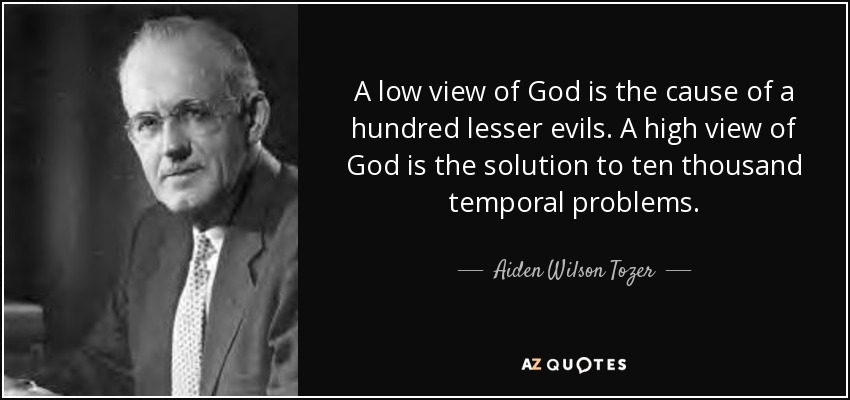
tozer-view-of-god

Noticeably in Psalm 94, the ungodly people have a poor view of God. Observe the evidence in verses 3-11 how the wicked are unconcerned about what God sees and what God knows:

  • v. 4 “All the evildoers boast in arrogant words.”
  • v. 5 “They crush people of God.”
  • v. 6 “They murder the fatherless.”
  • v. 7 “They say the Lord does not see.”

The psalmist concludes in verse 8, “O fools, when will you be wise?” In verse 18, the psalmist shares, “My foot slips, but your steadfast love holds me up.”  As a result, we can clearly see that there should be a difference between the ungodly and the psalmist who has a genuine walk with God.

I want to continue the discussion on the topic of View of God, but I want to apply it to a specific arena of sin: porn. When we help people (both men and women struggle in this arena) who have an addiction to porn or who are headed down this pathway, it is necessary to pry open the doorway marked View of God in their hearts. What do we find inside the room? Will those people recognize the steadfast love of God, or will they doubt His love and give into the porn?

If I can continue the imagery for a moment, let’s suggest that inside the door is a room with sayings on the wall: “God is good”–one saying on the wall. “God is sufficient,” says another. “God is everywhere.” And in the back corner is one which says, “God knows everything.” Great. That is what the walls of our mind suggest to us. And we would say that we believe those things. But our true or functional view of God is quite different if we are involved with pornography. “God is holy” may just be a nice, quaint saying if we don’t believe it has relevance to our struggle with our lust for more images of people in immoral, internet websites. We don’t seem to really think a holy God will pay much attention to us. We can hide in an office, bedroom, or café, fooled into thinking that God does not see.

Anyone who has been a Christian for a while has a sense of who God is and what He is like. But those attributes, for some folks, may not do much for daily life. In fact, our daily choices and sins may actually suggest the opposite. We are a functional atheist or at best a functional deist (God is great enough to create the world but he has left it to go its own course and left “me” to pick and choose my poison).

What are the functional problems for a person who struggles with porn?

I don’t really believe God sees me. Sins that involve hiding behind the door of my house, my bedroom, or some other seemingly anonymous place, is simply giving me the sense of being hidden. I feel if neighbors do not see and know, then God does not either. This God I believe in, seems removed, distant, un-involved in my life.

I don’t really believe God loves me. Since the Bible says that God corrects those he loves (Heb. 12:6-8), then if I think God sees me and loves me, then I know he will correct me and chasten me when I am involved in my sin of the flesh. This un-involved God seems not to care about my struggle or my problems because I’m getting away with my sin for a time.

I don’t really believe God is sufficient. He supposedly will give me what I need. and He will satisfy my soul. But not so is the soul of the porn-seeker. He feels he must have another look. He cannot help but spend some time online today on certain sites. Why? His soul longs for something other than a God who seems outdated or far away.

I doubt God’s faithfulness. Life has gone okay in the past, but it seems to be falling apart right now. My debt, my work schedule, my family problems, and things like my truck and the dryer that broke down at the same time all suggest that God is out-to-lunch right now. He is letting things go. He is not faithful. The work of “carrying the support of the universe” is too much for God to pay attention to me. This thinking is of course a view from a first-world country where we are accustomed to life going smoothly because of the abundance of our possessions. God is supposed to keep a smooth life on track. Otherwise, He is not faithful, so I find refuge (another of God’s characteristics that I’m neglecting to acknowledge) in my online porn addiction to make me feel better because my ducks were not in a row.

We could perhaps go through most of the list of God’s attributes and find some connections to our sin and its hold on us. We play the Christian game, but we do not get honest about our sin because we feel like this is the way life will be; therefore, we might as well just keep plodding and sinning. After all, “God does not seem to care.” And if he tries to get our attention, in love, we just ignore that love and grasp onto our twisted view of God. Our view of God is just plain messed up.

The solution? These characteristics of God–His omnipresence, His love, His sufficiency, His faithfulness–must be real for me. I must believe them to be true. My heart must be guarded with these living truths. Bottom line–this is the process that I include in Soul Purity http://www.coatscounsel.net/soul-purity/, an 8-week study, that walks alongside someone who struggles with sexual addiction.  It’s not the putting off of the sin which certainly must happen.  It’s the putting on of my very real God.

Posted by David Coats, 0 comments

Ponder These Words Before You Vote

By Drs. Dave and Judi Coats 

sdc13436

a.      All authority comes from God, and those in positions of authority have been placed there by God (Romans 13).

b.      Authorities are God’s servants, sent for our good (Romans 13).

c.       We must submit to authorities to keep a clear conscience (Romans 13). 

d.      Give respect and honor to those who are in authority (Romans 13).

e.      And remember, in the time of Roman rule, the authorities were ruthless, underhanded, barbaric, and severe. Yet believers were admonished to respect and to honor and  to submit.

f.        We are “already, but not yet” under Kingdom rule in which Christ will rule and reign perfectly.  Anything else will definitely be flawed severely. 

g.      In God’s sovereignty, we will be under the authority of  some new president after the next inauguration.  We need to pray for them, and we need to respect them.

h.     Many Christians, respectable leaders, full of integrity, do walk the halls of Congress; we need to pray for them for wisdom as they work with authorities over them.

i.        All the severely illogical, poorly written, emotionally-charged comments and articles on Facebook do not substitute for doing your own research regarding the candidates. 

j.        Drive or walk to the polls; vote, armed with your own research; and trust God that He is in control; and be at peace with the outcome.

k.      Since righteousness exalts a nation, it absolutely must begin in our local churches as we fill our communities with salt and light.

l.        Leaders of government are “sent for the very purpose of punishing those who do what is wrong” (Romans 13); pray that the candidate who wins will uphold this responsibility before God.


Posted by David Coats, 0 comments

Jonah’s Counsel from God

gospelA short story can be a very powerful way to communicate big ideas. The writer must manage the material in such a way as to draw clear images for us quickly.

God tells us a powerful short story about Jonah. We are brought into his life at a critical point in order to communicate to us something about God that we must grasp as part of the overall gospel narrative (man’s brokenness and God’s redeeming grace). In fact, the gospel of Jonah (I know, you would not normally have called it that) is an amazing look right into the heart of man and God at the same time.

As well, God is in the process of counseling the prophet Jonah. Yes, in a certain way, we get to sit in on a counseling session between God and Jonah. Although the session or sessions come to an end quickly for us, we still get insight into God’s heart and Jonah’s heart. And that is the core of biblical counseling, bringing man and God together in such a way that man is faced with truth about God and truth about his own heart. The result depends on man’s response to what he sees and hears about God and what God wants of man.

In Jonah’s case, God wants to remind Jonah, and all of us, of His compassion–major theme number one. And Jonah knows this. When God asks Jonah to tell the people of Nineveh to repent, Jonah even admits that the reason he disobeys God is that He knows exactly what God will do if the people of Nineveh turn in repentance from their sins to God. God will remove the judgment he planned to carry out against the people of Nineveh which Jonah does not want to happen. So in effect, the good news for Jonah is that God is still compassionate and longsuffering because He does not leave Jonah in the belly of the large fish with his head wrapped in seaweed. He brings Jonah up again to dry land. But Jonah does not appreciate the care of God for Jonah. He especially does not appreciate God’s care for anyone other than himself and his own plans.

Also, God uses the story to communicate a second major theme to us and that is the sovereignty of God. He is in control. Jonah cannot get away from God’s power and control over the forces of nature which will be used against Jonah in his own rebellion against an all-powerful God. Jonah looks silly, foolish, childish in his selfish rants about God’s compassion and care for him and for the people of the city. God has compassion when Jonah pouts outside the city of Nineveh, and He grows a plant to shade Jonah; but then God’s sovereignty removes the plant. And Jonah believes that he is justified in his rant against God and the powers of nature at God’s disposal.

This is where the short story of Jonah ends abruptly. God chastises and corrects Jonah by using an object lesson to show Jonah his own sin–Jonah cares for shade and is mad when a plant dies and removes his shade, yet he does not care for the lives of a city–Nineveh. Unfortunately, we see no evidence of Jonah’s repentance. He does not appreciate a compassionate and sovereign God (the two major themes of this short story) and he does not turn from his selfish worldview while the city of Nineveh turns in mass from their sin to a holy and righteous God. Perhaps part of Jonah’s struggle is that he has had so little response from his own people to God’s call for repentance and true worship while here in the pagan city of Nineveh the people turn to God and worship Him.

Posted by David Coats, 0 comments